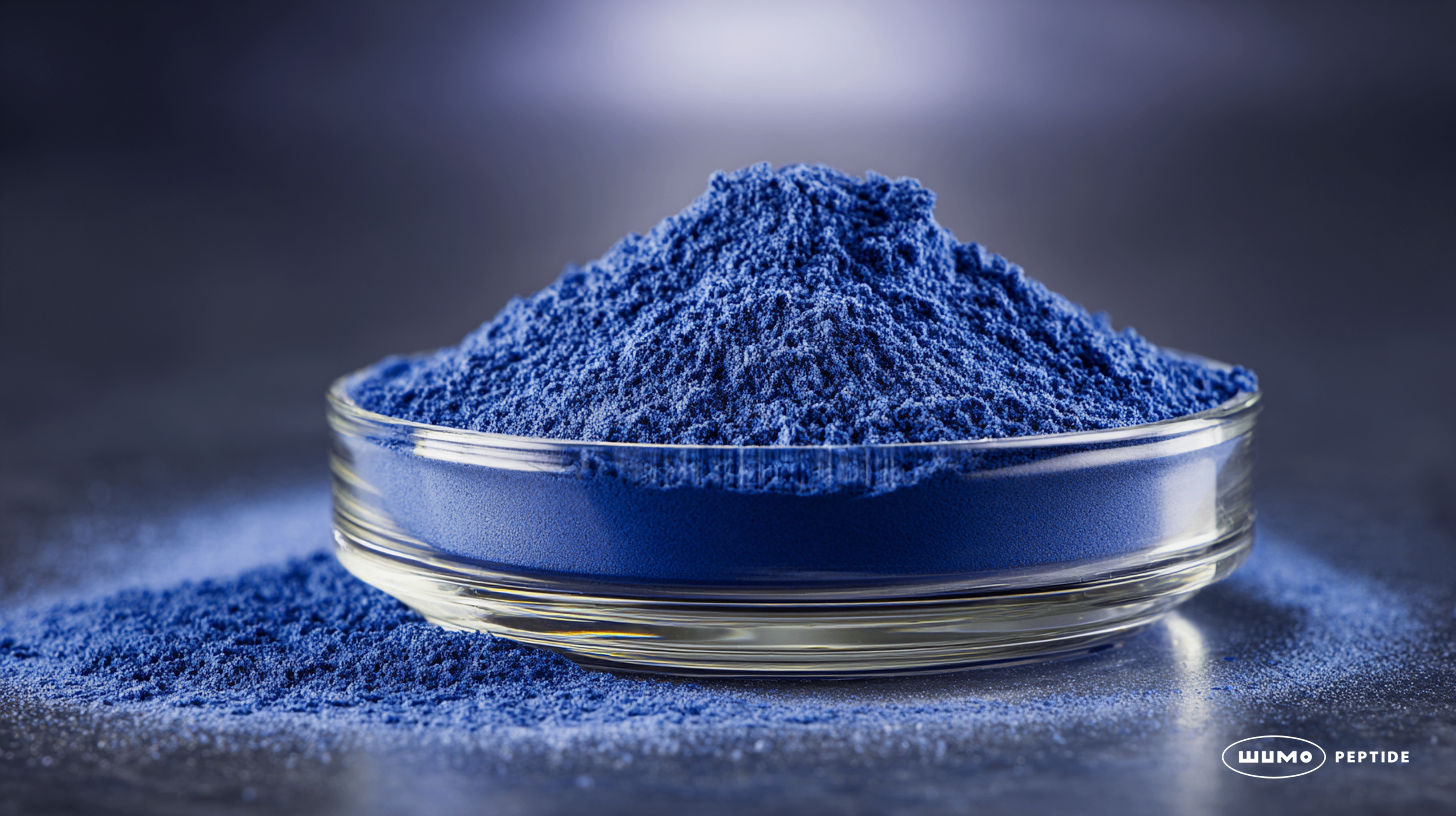
Copper Tripeptide-1 is typically reviewed in projects focused on skin conditioning, visible aging concerns, and scalp-related formulations. It is often considered when formulation teams are looking for peptide-based support within repair-oriented or multi-active systems.
Core Peptide Guide
Copper Tripeptide-1 (GHK-Cu) Ingredient Guide
Copper Tripeptide-1 is the INCI name, commonly known as GHK-Cu (CAS 89030-95-5). Review where Copper Tripeptide-1 fits in formulation, how it is typically used, and what to check before sourcing, including specifications, documentation, and project alignment.
Core Peptide Guide
Where GHK-Cu Is Commonly Evaluated
Core Peptide Guide
Typical Application Contexts
Copper Tripeptide-1 is commonly used in serums, creams, and scalp care products where peptide positioning supports overall formulation structure. It is often combined with other actives depending on product direction, rather than used as a standalone positioning ingredient.
- Anti-aging serums and repair-focused formulations
- Post-treatment or barrier-support product concepts
- Scalp care and hair-related formulations
- Multi-peptide systems for advanced formulations
Core Peptide Guide
What to Review Before Sourcing
Before requesting samples or pricing, teams usually confirm whether Copper Tripeptide-1 aligns with their formulation requirements and internal evaluation criteria. This includes identity clarity, specification range, and documentation availability.
Checkpoint 01
INCI name, CAS number, and naming consistency across documents
Checkpoint 02
Specification range and purity levels for intended use
Checkpoint 03
Availability of COA, SDS/MSDS, and technical documentation
Checkpoint 04
Compatibility with formulation system and stability expectations
Core Peptide Guide
Documentation and Technical Support
Supporting documents such as COA and SDS/MSDS are typically required for internal review. Additional technical information can be provided based on project needs, including specification details and sample availability.
- Certificate of Analysis (COA)
- Safety Data Sheet (SDS/MSDS)
- Specification sheet and technical overview
Why buyers trust Guangzhou Peptide Research Center
Real content, documented — not guesswork
In peptide sourcing, chromatographic purity and delivered quantity require separate evaluation. We keep purity and labeling basis distinct on available documentation, so buyers can review analytical parameters for their quoted batch before ordering.
Purity vs quantity distinction
Purity (%) and reported quantity are distinct analytical parameters. Review purity and reported quantity separately, and confirm the labeling and assay basis for the batch proposed for your order.
Batch-specific documents
Batch documentation reflects the specific lot produced. Ask which batch-specific documents are available for the quoted lot, including COA and supporting HPLC or MS records where applicable.
Documented before commitment
Ingredient identity (INCI / CAS), specification sheet, and SDS are available for technical review. Confirm documentation for the batch proposed for your order before purchase.
Technical Video Brief
Copper Tripeptide-1 Analytical & Formulation Video Overview
Review supplier laboratory analytical checks, physicochemical properties, and reference formulation study benchmarks with full transcripts.
Cosmetic Peptide Technical Brief1:00
Ingredient & Study Brief · CAS 89030-95-5 · 1:00
GHK-Cu (Copper Tripeptide-1): Molecular Identity, HPLC/MS Checks & 56-Day Reference Formula Study
Technical overview of Copper Tripeptide-1 (GHK-Cu, CAS 89030-95-5): glycyl-L-histidyl-L-lysine copper complex structure, characteristic blue crystalline powder appearance, supplier mass spectrometry (MS) and HPLC identity/purity verification, in-vitro cell scratch migration assay, and a 56-day reference facial formula study on 36 adults.
Verification scope:INCI Copper Tripeptide-1 identity, HPLC/MS verification & reference topical study summary
Jump to timestamp:
Key Verifiable Points & Parameters
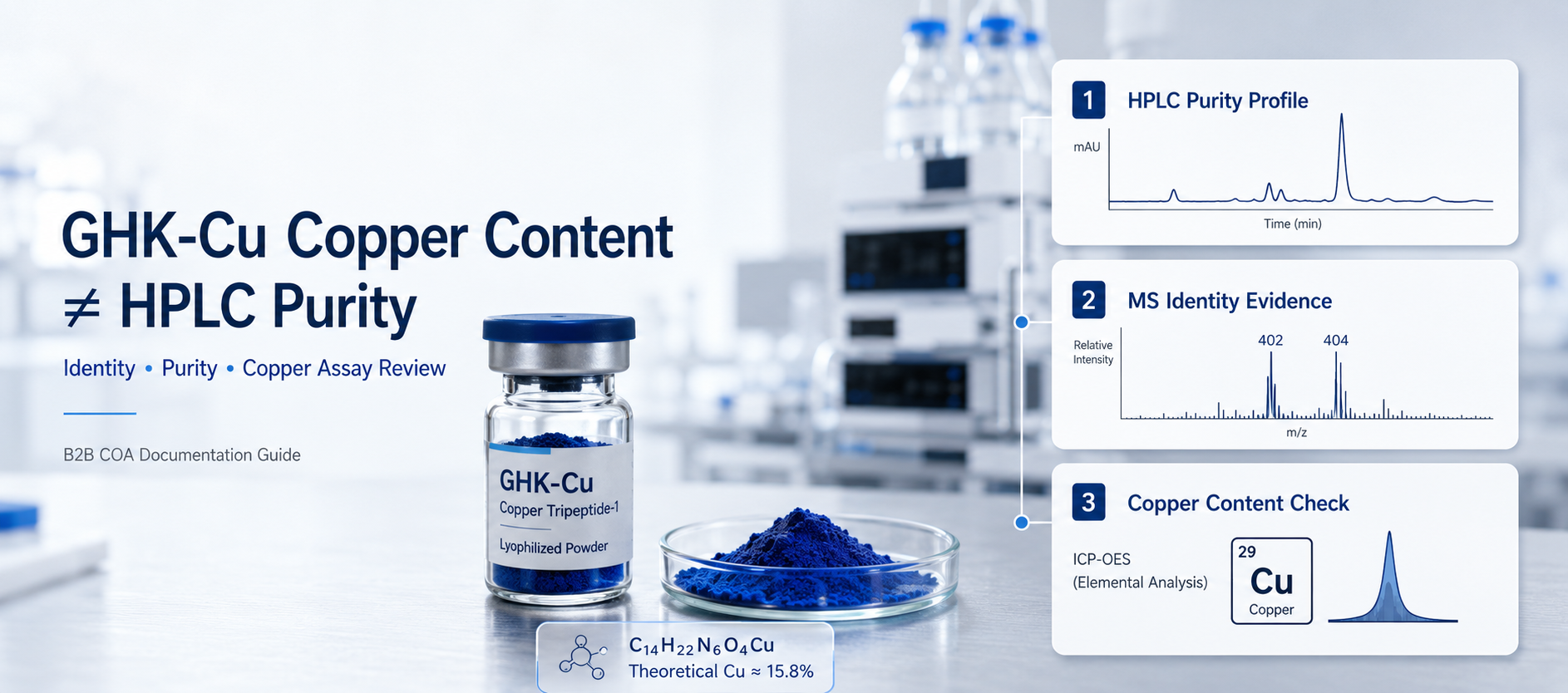
- Identity: INCI Copper Tripeptide-1 (GHK-Cu, commonly referenced as CAS 89030-95-5, C14H22N6O4Cu) — complex of tripeptide GHK with a copper(II) ion, presenting as a characteristic blue powder.
- Analytical Documentation: Batch identity and purity are verified through mass spectrometry (MS) and HPLC chromatographic records.
- In-Vitro Cell Scratch Assay (Supplier Data): Tested concentrations showed +67% and +105% higher cell migration relative to control in a laboratory scratch model.
- 56-Day Topical Reference Study (n = 36 adults): Using a 0.2% reference copper peptide facial formula twice daily for 56 days, supplier data reported -25.96% wrinkle volume and +21.65% immediate elasticity vs baseline.
Read Verbatim Transcript, Summary & Verification Scope
Summary:Technical overview of Copper Tripeptide-1 (GHK-Cu, CAS 89030-95-5): glycyl-L-histidyl-L-lysine copper complex structure, characteristic blue crystalline powder appearance, supplier mass spectrometry (MS) and HPLC identity/purity verification, in-vitro cell scratch migration assay, and a 56-day reference facial formula study on 36 adults.
Verbatim Audio / Visual Transcript:Meet GHK-Cu, known in cosmetics as Copper Tripeptide-1. This distinctive blue ingredient combines the tripeptide GHK with a copper ion. Supplier mass spectrum and HPLC records help document sample identity and purity. In a cell scratch assay, tested concentrations showed higher migration than control (+67% and +105% vs control). These are laboratory findings. A separate 56-day facial product study followed 36 adults using a formula with 0.2% reference copper peptide complex twice daily. At day 56, the supplier reported 25.96% lower wrinkle volume and 21.65% higher immediate elasticity versus baseline for that formula. Explore Copper Tripeptide-1 for skincare designed to improve the appearance of fine lines. For cosmetic formulation development.
Editorial & Verification Scope Note:Cell scratch and 56-day topical study figures represent supplier-reported laboratory and reference-formula data (0.2% reference copper peptide formula, n = 36) for cosmetic formulation context only. Any third-party trade names appearing in literature or reference charts remain the property of their respective owners. Confirm batch-specific COA, HPLC purity, MS identity, and copper content on your quoted Guangzhou Peptide Research Center batch before ordering.
Core Peptide Guide
Research Support
Copper Tripeptide-1 (GHK-Cu) has been discussed in cosmetic and skin-related research in the context of skin conditioning, extracellular matrix support, antioxidant response, and topical delivery considerations. The references below are included as supporting context for technical review and formulation discussion rather than as therapeutic claims.
- GHK-Cu has been discussed in review literature in relation to skin regeneration, extracellular matrix support, and visible skin quality considerations.
GHK Peptide as a Natural Modulator of Multiple Cellular Pathways in Skin Regeneration - Published cosmetic-science literature has also discussed GHK-Cu in connection with antioxidant response and copper-related biological activity in skin.
GHK-Cu may Prevent Oxidative Stress in Skin by Regulating Copper and Modifying Expression of Numerous Antioxidant Genes - Topical delivery behavior has been evaluated in in vitro / ex vivo skin penetration studies, which can be useful when considering formulation and delivery strategy.
Human Skin Penetration of a Copper Tripeptide In Vitro as a Function of Skin Layer - More recent formulation research has examined liposomal carrier systems for GHK-Cu, showing continued interest in improving cosmetic delivery performance.
Liposomes as Carriers of GHK-Cu Tripeptide for Cosmetic Application
Core Peptide Guide
Request Technical Files or Sample Support
Contact us to request COA, SDS/MSDS, or discuss sample availability, pricing, and project requirements. Our team can support evaluation and sourcing for qualified projects.
Core Peptide Guide
Related reading
Use nearby articles and ingredient guides to continue comparison and evaluation without restarting the review.
Related Articles
Core Peptide Guide
Related products
When your team is ready to move from ingredient understanding into product-level sourcing review, start here.